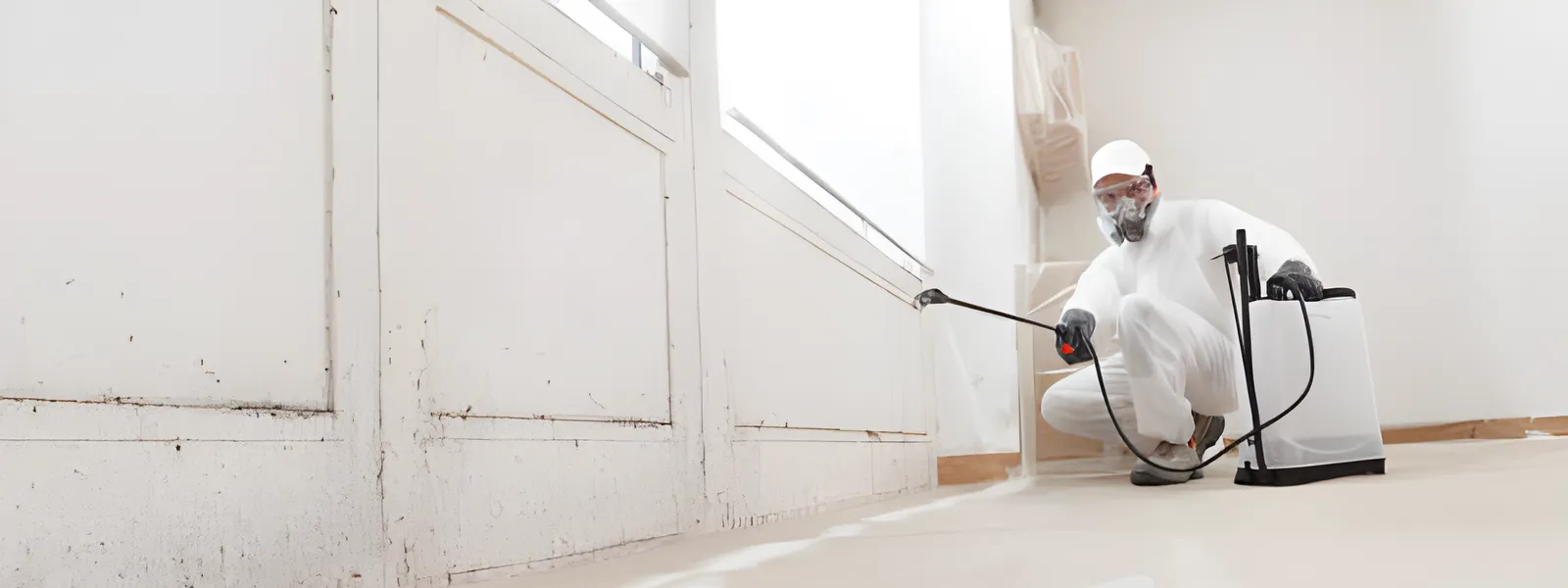
Water damage and mold are directly connected. In commercial buildings, one almost always follows the other when the water event is not addressed quickly and completely. Understanding how mold develops after a water intrusion, what conditions accelerate it, what the professional remediation process involves, and why the response timeline matters more than most property owners realise is practical knowledge that applies to every commercial and industrial building regardless of size, age, or location.
This article covers mold development after commercial water damage from the ground up, including the conditions that cause it, the mitigation services that address it, and the steps that prevent a water loss from becoming a mold loss.
How Mold Develops After a Commercial Water Event
Mold is a biological organism that requires three conditions to establish and grow: moisture, an organic food source, and suitable temperature. Commercial buildings provide all three in abundance after a water intrusion event. Structural framing, drywall, insulation, ceiling tiles, flooring substrate, and wood-based building components all serve as food sources for mold when they are wet. The ambient temperatures in a commercial building are almost always within the range mold requires. The only variable that a mitigation response can control is moisture.
The IICRC S500 Standard for Professional Water Damage Restoration establishes that mold can begin developing on wet structural materials within 24 to 48 hours under standard indoor conditions. In warmer climates, including California's Central Valley where summer temperatures regularly exceed 90 degrees Fahrenheit, that window can be shorter. This means that from the moment water contacts structural materials in a commercial building, a biological clock begins running. Every hour of delay in professional water extraction and structural drying is an hour closer to mold establishment.
What makes commercial water events particularly challenging is the behaviour of water in a large structure. Water does not stay where it is visible. It migrates through wall cavities, travels under flooring assemblies, saturates insulation, wicks into subfloor systems, and moves through building penetrations. A commercial building that appears surface-dry within 24 hours of a water event may still have significant moisture in concealed structural assemblies where mold will establish and spread without any visible indication until the contamination has become substantial.
The Connection Between Water Damage Category and Mold Risk
Not all water events carry the same mold risk, and the category of water involved directly affects the urgency and scope of the mold prevention response.
Category 1 water, from a clean supply line or rain intrusion through a roof membrane, carries relatively low initial biological contamination. However, Category 1 water that is allowed to sit in contact with building materials for more than 24 to 48 hours degrades in classification as it absorbs organic matter from the materials it contacts read more and begins supporting microbial activity. A Category 1 event that is not addressed promptly can create the same mold risk as a more contaminated event.
Category 2 water, from appliance overflow, dishwasher discharge, or washing machine failure, already carries biological contamination at the point of intrusion. The mold risk from a Category 2 event is elevated from the start, and any structural materials that absorb Category 2 water require antimicrobial treatment as part of the mitigation scope.
Category 3 water, which includes sewage backup, outdoor floodwater, and any water that has been standing long enough to develop significant microbial activity, presents the highest mold risk of the three categories. Category 3 water introduces large quantities of biological material directly into structural assemblies. Without complete extraction, thorough drying, and comprehensive antimicrobial and antibacterial treatment of every affected surface, mold establishment after a Category 3 event is almost certain.
What Professional Mold Mitigation Involves
When mold has already established in a commercial building following a water event, the response moves from water damage mitigation into mold mitigation support. This is a distinct scope of work governed by the IICRC S520 Standard for Professional Mold Remediation, and it requires specific containment, filtration, and removal procedures that go significantly beyond standard cleaning.
Mold containment barriers and engineering controls are the first step. Polyethylene containment barriers and zip wall systems isolate the affected area from the rest of the building, preventing mold spores disturbed during remediation from spreading to unaffected zones. Critical barrier construction establishes a sealed work area with controlled access. Decontamination chamber setup provides a transition zone between the contaminated area and the clean building. Containment integrity checks confirm the barrier system is maintaining proper isolation throughout the remediation process.
Negative air pressure systems are established within the containment zone. Negative air machine setup, HEPA exhaust ducting installation, and pressure differential verification confirm that air movement within the containment is directed outward through HEPA filtration rather than into the surrounding clean areas of the building. Airflow management and spore migration prevention measures maintain these conditions throughout the entire remediation scope. This engineering control is one of the most critical components of a professional mold remediation project, because disturbing mold growth without proper negative air pressure creates airborne spore counts that can contaminate areas far beyond the original mold zone.
HEPA air scrubbing and filtration operates continuously throughout the remediation process. HEPA air scrubbers placed within the containment zone capture airborne spores generated by the removal work. Continuous air filtration operation, airborne spore count reduction, air quality monitoring, and equipment runtime documentation all contribute to the air quality record that supports post-remediation clearance testing.
Mold affected material removal addresses all building components that cannot be cleaned and retained. Mold damaged drywall removal, contaminated insulation disposal, affected substrate bagging and sealing, and regulatory compliant disposal are all performed within the containment zone using full personal protective equipment. Exposed framing cleaning treats structural elements that can be retained after surface mold is removed and the material has dried to acceptable moisture content levels. Treated cavity documentation records the condition of every cleaned surface before the containment is closed.
Post-remediation clearance preparation is the final stage of the mold mitigation scope. Final remediation cleaning, containment integrity maintenance through the clearance testing period, documentation package compilation, and industrial hygienist coordination prepare the site for third-party clearance testing. Clearance sample site preparation ensures that testing locations are accessible and that the site conditions at the time of testing accurately represent the remediation outcome. Remediation completion sign-off confirms all scope items are complete before the industrial hygienist conducts the clearance assessment.
Why Mold Remediation Requires a Licensed Contractor in California
In California, mold remediation in commercial buildings is regulated work. Contractors performing mold affected material removal and structural remediation must hold a valid California contractor license in an appropriate classification. The California Contractors State License Board requires a General Contractor license as a minimum for this category of commercial work. The IICRC S520 standard further requires that mold remediation contractors follow documented procedures for containment, removal, and post-remediation verification.
The involvement of a third-party industrial hygienist for clearance testing is a standard component of commercial mold remediation projects. The industrial hygienist conducts post-remediation clearance sampling independently of the remediation contractor, providing an objective assessment that the mold has been successfully removed and that the building is safe for re-occupancy. Insurance carriers and commercial property managers typically require this independent clearance as a condition of claim closure and re-occupancy approval.
For insurance purposes, the documentation produced throughout the mold mitigation scope is as important as the remediation work itself. Containment setup records, negative air pressure monitoring logs, air quality monitoring data, material removal documentation, clearance sample results, and remediation completion sign-off together form the claim package that insurance adjusters use to process a commercial mold remediation claim efficiently.
Preventing Mold After a Commercial Water Event
The most effective mold mitigation strategy is preventing mold from establishing in the first place. This requires a professional water damage response that begins within the first few hours of a water intrusion event and addresses moisture in all structural assemblies, not just the visible surface areas.
Emergency water extraction removes standing water from the structure using commercial-grade extraction equipment. Moisture mapping and thermal imaging identifies all areas of water migration including concealed wall cavities, subfloor systems, and building penetrations where water has traveled beyond the visible flood zone. Structural drying using commercial air movers and industrial dehumidifiers, with daily moisture log recording at every mapped location, drives moisture out of structural materials before the mold development window closes.
Where wall assemblies have absorbed water beyond the point where in-place drying is viable, flood cuts and drywall removal expose the wall cavity for complete drying and treatment. Wet insulation removal eliminates one of the most common concealed moisture retention points in a water-damaged commercial building. Antimicrobial and antibacterial treatment applied to all affected structural framing, subfloor surfaces, and building assemblies after drying is confirmed provides a biological barrier against mold establishment in materials that have been wet but are now within acceptable moisture parameters.
The entire prevention sequence, from extraction through drying through antimicrobial treatment, must be documented with daily moisture logs, equipment placement records, drying progress reports, and final moisture verification. This documentation demonstrates to the insurance copyright that the water event was addressed completely and professionally, and that mold prevention measures were applied throughout the mitigation process.
What Commercial Property Managers Should Have in Place Before a Water Event
For commercial and industrial property managers responsible for multiple buildings across a portfolio, having a response plan in place before a water event is the most practical preparedness step available. That plan should include a licensed, IICRC-certified mitigation contractor identified as an copyright, an understanding of the water shutoff locations in each building, and a review of each property's insurance coverage to confirm what categories of water damage and mold remediation are covered under the existing policy.
Mold remediation is not always covered by standard commercial property insurance. Some policies exclude mold entirely, others cover it only when it results directly from a covered water event and only when the water event itself was addressed promptly and professionally. Understanding the insurance position on mold before a water event occurs determines how the response is documented and what evidence needs to be preserved from the first hour of the loss.
For commercial and industrial property owners and managers seeking further information about mold mitigation support, water damage response, or post-remediation clearance preparation services in the Central Valley, contact [email protected].